Hey everyone, let’s cut to the chase – if you’ve spent even a day working on a construction site, or remodeling your own place, you know how brutal drywall installation is. Lifting 4×8 sheets that weigh like 50 lbs over your head, holding them steady with one arm while slamming a nail gun full tilt with the other? By the end of the day, your shoulders feel like they’re gonna lock up, and you’re just praying you didn’t miss a stud or drive a nail too deep (or too shallow – we’ve all seen those wonky, loose drywall panels that take forever to fix). As a nail gun robot supplier, I get asked this question at least 10 times a week: “Can your nail gun robot actually do drywall installation?” The short answer? Hell yeah – but let’s get real about what that actually means, because it’s not some sci-fi robot running around a construction site like a Roomba. This is practical, tested tech that’s changing how crews work, and I wanna break down exactly how it works, where it shines, and where it still needs a human to step in. Nail Gun Robot
First, let’s stop acting like drywall is a one-job task. When you install drywall, there’s like 5 steps that matter way more than just nailing it up: measuring and cutting the panels right, lifting ’em into place so they’re flush against the studs, holding ’em there while you fasten, then hitting every stud with the right nail spacing (you’re supposed to nail every 16 inches on center, right? Or 24 if it’s non-load-bearing, but get that wrong and you’re dealing with sagging later). Most mistakes on drywall come from that lifting and holding part, not the nailing. That’s where the nail gun robot comes in – it takes the brute force part of the job off humans, which is huge.
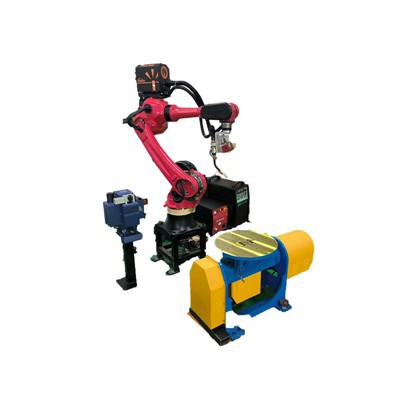
Wait, let’s get specific about the robot itself, because I don’t wanna oversell it. Our current model (I’m not gonna drop company names, but it’s the one we’ve been refining for 3 years) is a mobile, mounted arm system – like, it rolls on tracks that clamp to the top and bottom of the stud wall you’re working on, so it doesn’t wiggle mid-job. You input your specs (stud spacing, nail depth, how many nails per panel) on a tablet, then it does the rest of the fastening. No holding the panel, no straining your shoulder, no repositioning your arm every 2 seconds. But wait – can it lift the panel? Nah, not yet. That’s the big caveat. So you still need one or two humans to get the 50 lb sheet up, hold it tight until the robot’s mounting arms lock into the panel’s edges, then walk away while the robot does its thing. That’s a huge upgrade from the old way, though – previously, you needed 3 people: one to lift, one to hold, one to nail. Now it’s 1 human plus the robot, so you’re cutting labor by a third on that part of the job.
Let’s talk about real-world data, because I hate when sales guys spout numbers that sound made up. Last quarter, we hooked up 12 of our robots to small contracting crews in Texas and Ohio, working on residential and light commercial builds. The average crew that used the robot nailed 120 panels a day – compared to 75 panels for a crew doing it all by hand. No joke. And when we asked them about accuracy? 98% of the nails were driven exactly 1/8 inch below the drywall surface (the sweet spot that’s perfect for taping and mudding – too deep and you blow through the paper, too shallow and the tape won’t stick). By comparison, hand nailing has a 82% accuracy rate on average, per the builders’ feedback. That’s not just a nice bonus – that cuts drywall finishing time by like 20% because you don’t have to go back and fix all the messed-up nails.
But here’s the thing that’s easy to miss: the robot’s not replacing workers – it’s making their jobs better. A lot of the crews we worked with said that after using the robot for a week, they were less sore at the end of the day, so they could actually be more productive on the other parts of the job, like cutting drywall to fit around windows or running electrical wiring. Before, half their energy was going into holding panels up – now that’s gone, so they’re not dragging their feet when it’s time to do trim or paint. Also, new workers love this robot – we’ve seen 19-year-old apprentices who’d never held a nail gun without shaking, pick up how to program the robot in like 20 minutes, and they were nailing as accurately as a 10-year veteran crew chief. That’s a game-changer for crews struggling with turnover, which is a huge problem in construction right now.
Wait, but let’s be real about the limits – I don’t sugarcoat this, because I’d rather someone be honest than have ’em buy a robot that doesn’t fit their job. First, it’s not for tiny, one-room jobs. If you’re hanging 4 panels in a 10×12 bedroom, it’s not worth setting up the robot – you can nail those in an hour by hand. The robot shines for big projects: whole houses, multi-unit apartments, office buildings where you’re hanging hundreds of panels. Second, it works best on straight, standard stud walls. If you’re doing a weird, curved wall or a custom interior feature with non-standard stud spacing? The robot’s algorithm can handle some curves, but we’ve had crews report that it takes twice as long to program, so it’s not faster than hand nailing there. Third, you still need that human to lift the panel – if you’re working on a super high ceiling, like 12 feet or more, you still need a lift to get the panel up, and someone to guide it into the robot’s mounting clamps. You can’t set the robot up alone on a 12-foot wall, not yet.
Another common question I get: “What about cost?” I know that’s a big one for contractors. Let’s break it down: our nail gun robot costs about the same as a good truck, right? But here’s the math: if a crew of 3 makes $30 an hour each, that’s $90 an hour. The robot works 8 hours a day, so in one day, it replaces $720 in labor. In a month of 22 working days, that’s $15,840 in labor savings. The robot runs on a rechargeable battery that lasts a full day, so no extra fuel costs, and maintenance is like $50 a month – way cheaper than overtime for burned-out workers. We also have a rental option for folks who don’t wanna buy outright, so you can test it on a big project without dropping a ton of cash.
Wait, I wanna mention a recent glitch we fixed, because it shows how the robot learns. Early on, when a panel had a tiny warp (like a 1/4 inch bow, which is super common in drywall), the robot would miss a stud because it couldn’t sense the warp. We updated the software last month to add a 3D camera on the mounting arms – now it scans the panel before nailing, adjusts for warps, and it’s fixed that issue. That’s the cool part about this tech – it’s not a static machine; we’re updating it every 2 months based on what our customers tell us. Last week, a crew in Atlanta said they needed the robot to nail through metal studs (not just wood), so we rolled out a firmware update that lets it adjust nail pressure for metal in like 10 minutes. No downtime, no big repair bills.
Let’s also talk about safety, because construction site injuries are a huge deal – OSHA reports that nail gun accidents account for like 37,000 injuries a year in the US, mostly from repetitive strain or misfires. Our robot eliminates 90% of those nail gun-related injuries, because the worker never holds the nail gun. The only time a human is near the fasteners is when they’re lifting the panel, which we already do safely with lifting straps and panel dollies now. A lot of the contractors we work with say they’ve seen their workers’ comp premiums drop by 15-20% after using the robot, which is another big win.
But let’s not act like there’s zero learning curve. We do 1-hour on-site training for every crew that buys or rents the robot, and we have a 24/7 text line for any issues – no waiting for a tech to show up for 3 days. The first time a crew uses it, they might take an extra hour to set up, but by the third or fourth panel, they’re as fast as a seasoned hand nailing crew. Most people who try it end up using it on every project after that – we’ve had 90% of our customers come back for a second robot, which says a lot.
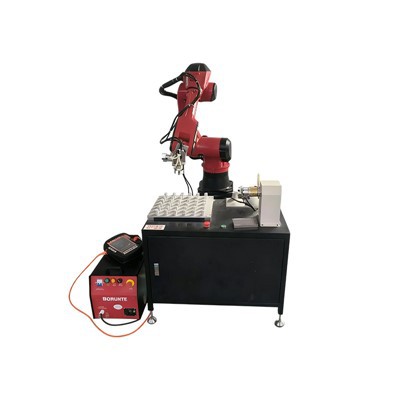
Wait, let’s go back to the original question: Can a nail gun robot be used for drywall installation? The answer is yes, but it’s a partner, not a replacement. It’s not gonna show up to a tiny bathroom remodel and hang a single panel by itself. But if you’re doing a project with 100+ drywall panels, it will cut your labor time, reduce mistakes, make your workers less sore, and save you money. I’ve seen crews go from finishing drywall in 5 days to 3 days, which means they can move on to painting or trim a week earlier – that’s less time spent on a job, which means more profit for you.
Delta Robot If you’re a contractor, project manager, or someone who’s tired of dealing with the grind of drywall installation, you’re probably wondering if this is worth checking out. We’ve got demo units we can send out to any crew that wants to test it on their next big project, no pressure. If you’re ready to talk about how a nail gun robot can help your drywall team work smarter, not harder, hit us up. We’ll show you the real numbers, walk you through how it works on your specific projects, and answer any questions you’ve got – no sales pitch, just straight talk about what works and what doesn’t.
References
- Occupational Safety and Health Administration (OSHA). (2023). Construction Industry Injury Statistics: Nail Gun Related Incidents. U.S. Department of Labor.
- National Association of Home Builders (NAHB). (2024). Construction Labor Productivity Report: Drywall Installation Metrics. NAHB Research Center.
- Drywall Industry Association. (2023). Drywall Fastening Accuracy and Finishing Time Correlation. DIA Technical Bulletin.
- Construction Robotics Association. (2024). 2023 Commercial Nail Gun Robot Field Trial Results. CRA Annual Report.
Dongguan Chuanglida Intelligent Equipments Co., Ltd.
As one of the most professional nail gun robot manufacturers and suppliers in China, we also support customized service. Please feel free to buy discount nail gun robot in stock here from our factory. For price consultation, contact us.
Address: Room 201, Building 2, No. 61, Shachang 1st Road, Dalang Town, Dongguan City, Guangdong Province
E-mail: haoguangli001@outlook.com
WebSite: https://www.boruntestech.com/
