Hey everyone, it’s Mia here from the lab chair supply squad, and today we’re tackling one of the most common questions we get in our DMs and call lines: Can lab chairs actually hold up in wet environments? Like, the ones where spills happen left and right, sinks are right by the workbench, and you’re moving between washing glassware and handling samples that might leave stuff dripping on the floor? I see so many labs cheap out on regular office chairs here, and it ends up costing them way more in replacements and safety down the line. Let’s break this down straight, no fancy jargon, just real talk from someone who’s dealt with this exact chaos for years. Laboratory Chair

First off, let’s get one thing clear: not all lab chairs are created equal. I can’t stress that enough. If you grab a random ergonomic office chair from the big box store down the street, yeah, it’ll probably fall apart in a week if you spill acid, water, or even just cleaning solution on it. But that doesn’t mean all lab chairs are made the same either. Let’s start with what makes an environment “wet” when we’re talking labs, because that’s a super broad term. We’re talking about two main types: the occasional, small spill (like a beaker of DI water tipping over, or a bit of ethanol splashing on the seat during a extraction) and the constant, moisture-heavy environment—think a lab where you’re hand-washing glassware all day, a cold room with condensation dripping off walls, or a histology lab where formalin fumes are thick and spills of fixative are regular. That second type is where most people run into real issues.
Let’s talk materials first, because that’s the make-or-break for wet environments. When we design our lab chairs, we skip the cheap fabric and even standard vinyl that office chairs use. Fabric is the worst here—It absorbs every drop of water, cleaning solution, or whatever else you spill, and then it mildews, smells, and starts to tear after a month. I’ve seen labs go through 20 office chairs in a year because of this, and that’s not just money wasted—it’s also a hygiene risk. If your chair is growing mold from leftover liquid, that’s going to get tracked onto your workbenches, samples, maybe even into the air you’re breathing. Not good.
Now, the materials that actually work: polyurethane (PU) that’s specifically formulated for wet lab use, not the flimsy stuff you see on dining room chairs. Wait, no—wait, even PU has grades, right? Our lab chairs use cross-linked PU that’s water-resistant, chemical-resistant for common lab agents (we’re talking dilute acids, bases, ethanol, bleach solutions—stuff most labs use daily), and it’s seamless. Seams are another weak spot, by the way. If a chair has stitched seams, water seeps right in, gets trapped under the upholstery, and starts causing that rot or mildew we just talked about. Our chairs have molded one-piece seat and backrests, so there’s nowhere for liquid to hide. Then there’s the base, casters, and mechanisms—those parts get overlooked all the time. If you have a wet lab, the casters are sitting on damp floors all day, the base is exposed to splashes, and the gas lift under the seat is right where spills of cleaning solution can drip down. I’ve had a customer tell us their old chair’s gas lift rusted out in six months because they were mopping the lab floor daily, and the caster wheels seized up so bad they couldn’t roll anymore. That’s a huge safety hazard—if you can’t move your chair when you need to reach a beaker on the other side of the bench, or if it tips because a wheel is stuck, that’s how accidents happen.
Okay, now let’s test this with real-world scenarios, because I know you guys don’t care about lab specs—you care about “will this actually work for my lab?” Let’s take a organic chemistry lab, where spills of dichloromethane or ethanol are regular, and you’re washing glassware at a sink 10 feet away. Our chairs get wiped down daily with 10% bleach solution, no problem. The PU material doesn’t stain, doesn’t degrade, and the casters have sealed bearings, so moisture can’t get in to make them rust. We even have a customer at a local biotech who has them in their cell culture lab, where they have to wipe down every surface with 70% ethanol between uses. They’ve had their chairs for three years now, no tears, no mildew, no stuck casters. That’s the kind of durability we’re talking about.
Wait, but what about super wet environments? Like, a histology lab where formalin spills are common, or a food testing lab where you’re working with raw produce and water all day, or a marine lab where you’re near saltwater tanks? Here, we bump things up a notch. We offer chairs with a specialty vinyl that’s even more chemical-resistant, and we do what’s called a passivation treatment on the metal parts—base, caster stems, all the hardware—to prevent rust. We also have chairs with foot rings that are easier to clean, because in histology, you’re dealing with formalin fumes that can corrode metal over time. I had a histology lab manager call us last year saying their old chairs had rusted under the seat so bad they couldn’t adjust the height anymore. After they switched to our specialty wet lab chairs, they told us they only have to replace the chair’s foam every 5 years, not the whole chair, and the casters have been working fine for two years. That’s the difference between a chair made for labs vs. one that’s just labeled “lab chair” as a marketing trick.
Now, let’s talk about the myths that I hear all the time. First myth: “If a chair is waterproof, it’ll be uncomfortable.” No way. Our molded seat and backrest have high-density foam that’s still ergonomic—you can sit on it for 8 hours pipetting, running samples, whatever, and it doesn’t feel like a plastic board. The material is flexible, not rigid, so it contours to your body, but it’s still non-absorbent. The key is that we didn’t sacrifice comfort for durability, which is a mistake a lot of cheaper lab chair companies make. Second myth: “I can just cover my regular office chair with a plastic cover.” Don’t do that. First, the cover will slip, and you’ll have dead spots where liquid still gets to the fabric. Second, if you spill something that’s corrosive, the cover might not hold, and the fabric will still get ruined. Third, the cover will trap moisture, so you’re not solving the mold problem—you’re just hiding it. We’ve seen so many labs try this, and it never works long-term. Third myth: “All lab chairs are fine for wet environments.” Nope. We get a lot of people who come to us with chairs they bought from a big office supply site that say “lab grade” but are actually just office chairs with a different label. Their casters still have exposed bearings, their upholstery is basic vinyl that smells bad after a month, and their gas lifts aren’t sealed. That’s not a lab chair— that’s a marketing gimmick.
Now, let’s get into maintenance, because even the best wet lab chairs need a little upkeep to last. The good news is it’s way easier than maintaining a regular office chair. You just wipe it down daily with whatever cleaning solution your lab uses—bleach, ethanol, DI water, whatever. Don’t use harsh, abrasive cleaners like steel wool, that will scratch the PU, but a soft cloth and mild detergent is all you need. For the casters, every few months, you can pull them off (most are just a push-fit, no tools needed) and wipe them down, or even rinse them with water, and then put them back on. That’s it. No deep cleaning, no washing the fabric, no letting it air out. Our chairs are designed so that any liquid that gets on them drains right off, not gets absorbed.
Wait, but what about safety? I know a lot of lab managers care about that. Our wet lab chairs meet OSHA standards for ergonomics, right? So you’re not sacrificing safety for durability. The gas lifts are BIFMA certified, so they don’t have that risk of collapsing. The bases are wide enough (28 inches, standard for our wet chairs) so they don’t tip if you lean over to grab something, even on a damp floor. The upholstery is fire-resistant, which is a big one in labs where there are Bunsen burners or heat sources. I can’t tell you how many labs forget that, but if you have a wet chair that melts when it’s near a flame, that’s a disaster. Our PU material is rated for that, so no issues.
Let’s talk about cost, because I know that’s a big factor for most labs. When you look at the upfront cost, a good wet lab chair is a bit more than a regular office chair. But let’s do the math: if a regular office chair costs $150 and lasts 6 months in a wet lab, that’s $300 a year. Our wet lab chairs start at around $350, and last 5+ years. That’s way cheaper in the long run. Plus, you don’t have the cost of downtime—having to stop work every month to order new chairs, install them, dispose of the old ones. Or the cost of contamination from a moldy chair, which could lead to bad samples, failed tests, even regulatory issues. We had a customer in a food testing lab who told us their old office chairs had mold that got into their sample prep area, and they had to discard $10,000 worth of test samples. That’s way more than the difference between a cheap chair and a good wet lab chair.
Now, I know some of you have specific needs. Do you need a chair for a cold room? We have wet lab chairs that are designed to handle low temperatures, no condensation building up on them, no brittling of the material. Do you need a chair for a cleanroom? We have versions that meet ISO standards, so they don’t shed particles, which is crucial for pharma or microfabrication labs. We even have chairs that are compatible with ESD (electrostatic discharge) for labs handling sensitive electronics or samples that are static-prone. The point is, wet environment chairs aren’t one-size-fits-all, but when you work with a supplier that actually designs them for lab use, not just rebrands office furniture, you can get exactly what you need.
Wait, let’s address a recent concern I’ve been getting post-pandemic: more labs are doing more frequent cleaning, using stronger disinfectants, so they need chairs that can hold up to that. A lot of older vinyl chairs will start to crack or fade after a few months of being wiped down with bleach every day. Our cross-linked PU is formulated to resist that, even with daily exposure to 10% bleach or 70% ethanol. We’ve done testing in our own lab where we wipe down the chairs 10 times a day for 6 months, and there’s no sign of degradation. That’s something a lot of the cheap lab chairs can’t do.
I’ve had so many customers tell us that they were skeptical at first—“why would a chair be that different?”—until they saw their first one. One customer at a university chemistry lab told us that after switching, they stopped having to order replacement chairs every semester for their undergraduate lab sections, which have 200 students a year spilling everything from water to strong acids. That’s a huge win for their budget and for the students, who don’t have to sit in a rickety, broken chair during 4-hour lab sessions.
So, to circle back to the original question: yes, lab chairs absolutely can be used in wet environments, but only if they’re the right kind of lab chair. Not the ones that are just labeled for labs, the ones designed from the ground up to handle moisture, chemicals, and the kind of use that labs put furniture through. Regular office chairs, desk chairs, dining chairs—they’re not built for this, and they’ll fail fast. The good news is that investing in the right wet lab chair saves you money, reduces safety and hygiene risks, and makes everyone in the lab more comfortable and productive.
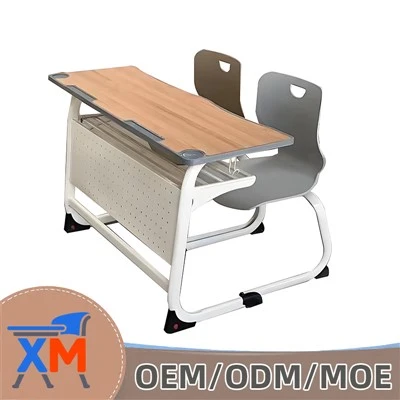
If you’re in the market for chairs for a wet environment, whether it’s a lab, wash station, cold room, or any space where spills and moisture are regular, feel free to reach out to us to talk through your specific needs. We can help you pick the right material, height adjustment, caster type, everything, so you don’t end up wasting money on the wrong chair. No hard sells, just straight talk, because we’ve been doing this long enough to know what works (and what totally doesn’t) in the messy, chaotic world of labs.
Student Single Table References
- Occupational Safety and Health Administration (OSHA). Ergonomic Guidelines for Laboratory Workstations. U.S. Department of Labor, 2022.
- American Society for Testing and Materials (ASTM). Standard Test Methods for Resistance of Upholstery Materials to Moisture and Chemical Exposure. ASTM International, 2021.
- National Sanitation Foundation (NSF). Standard for Equipment and Materials for Use in Wet Laboratories. NSF International, 2020.
- International Organization for Standardization (ISO). 14644-1: Cleanrooms and Associated Controlled Environments – Part 1: Classification of Air Cleanliness by Particle Concentration. ISO, 2015.
- Laboratory Safety Institute (LSI). Chemical Resistance of Upholstered Furniture for Laboratory Settings. LSI, 2023.
Shanghai Xinmu Industrial Co., Ltd.
We are one of the most professional laboratory chair manufacturers and suppliers in China. With abundant experience, we warmly welcome you to wholesale customized laboratory chair at competitive price from our factory. If you have any enquiry about pricelist, please feel free to email us.
Address: 3rd Floor, NO.5# Building, No. 288 Rongxing Road, Songjiang District, Shanghai
E-mail: sales@xinmugroup.com
WebSite: https://www.xinmufurniture.com/
