Hey there, if you’ve ever dug into electronics manufacturing or parts sourcing, you’ve probably run across that 1.00mm pitch spec more than once—whether you were hunting for connectors, ICs, or something in between. I’ve been deep in the game as a 1.00mm pitch component supplier for over 8 years now, and let me tell you, this pitch isn’t some random number we picked out of a hat. It’s the sweet spot that fixes way more headaches than it causes for OEMs, contract manufacturers, and repair techs alike. Today I’m breaking down exactly what components use 1.00mm pitch, why it works so well, and why it’s still one of the most reliable pitches out there right now. 1.00mm Pitch
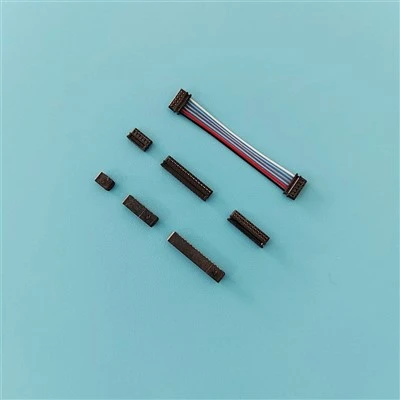
First off, let’s make sure we’re on the same page: pitch basically just means the distance between two adjacent connection points on a component. For 1.00mm pitch, that’s 1 full millimeter between each pin or pad, no rounding here. A lot of folks mix it up with 0.8mm or 1.27mm pitch, but 1.00mm is the middle child that’s big enough to handle decent power or signal loads, but small enough to pack more parts onto a PCB without overcrowding it. And as someone who’s sourced and shipped thousands of reels of these parts, I’ve seen it show up in more places than you’d expect—from tiny wearables to industrial control boxes, even in some automotive subsystems these days.
Let’s start with the most common one: board-to-board connectors. If you’ve ever taken apart a laptop, a smart speaker, or a handheld power tool, that little flat cable or snap-together pair of boards linking the screen to the main logic? That’s often a 1.00mm pitch board-to-board connector. Why this pitch here, specifically? 0.8mm is too tight for many assembly lines—those tiny pins are way easier to bend during pick-and-place, especially for small batch runs or prototyping. 1.27mm is a bit too bulky for modern slim devices, so 1.00mm hits that perfect balance. I’ve had a few clients come to me frustrated because they tried switching to 0.8mm to save space, only to have a 20% defect rate from bent pins during soldering. Switching back to 1.00mm dropped their defects to under 2%, and their production times went up because they didn’t have to waste time reworking bad parts. Even industrial control modules, which need to handle more vibration and stress than consumer gadgets, use 1.00mm pitch board-to-board connectors. The sturdier pin spacing means they don’t come loose when a machine shakes on a factory floor, which is way more reliable than a tighter pitch that can’t hold up to constant movement.
Next up, flexible flat cable (FFC) connectors. FFCs are those thin, flat, ribbon-like cables you see connecting things like a printer’s paper sensor or a gaming controller’s button pad to the main PCB. Almost all standard FFCs use a matching 1.00mm pitch, which makes sense because they’re made to pair perfectly with 1.00mm connectors. I remember when we first started carrying bulk FFC and connector sets a few years back—new engineering teams would often ask, “Why not use a custom pitch for this one small cable?” The answer boils down to compatibility and cost. Standard 1.00mm FFC is mass-produced everywhere, so it’s way cheaper than custom pitches, and replacement parts are easy to source if something breaks in the field. A lot of repair shops swear by 1.00mm FFCs because you don’t have to special order parts to fix a broken laptop hinge cable or a kid’s gaming tablet that won’t charge. It’s the go-to for anyone who needs a reliable, easy-to-replace connection for flat, flexible circuits, and as a supplier, that consistency is exactly why we keep these in stock on our shelves year-round, not just as a special order.
Then there’s surface-mount IC sockets and adapters, specifically for through-hole ICs that people want to mount on a surface-mount PCB, or for prototyping. A lot of hobbyists and small engineering teams don’t want to solder a DIP (dual in-line package) chip straight to a PCB, because then they can’t swap it out easily if it breaks or they need to test a different model. That’s where 1.00mm pitch sockets come in. These sockets have pins spaced 1mm apart, so they line up perfectly with the IC’s leads, and they solder right to the surface of a board. I’ve had hobbyists message me at 9 PM on a Friday panicking because they burned out a microcontroller for a robotics project and needed a 1.00mm pitch socket to swap it out—we keep emergency stock for exactly that kind of situation. Even many standard surface-mount ICs, especially smaller packages like QFN (quad flat no-lead) or SOIC (small outline integrated circuit) variants, use 1.00mm pitch for their leads? Wait, hold on—let me clarify that. Some SOIC packages do use 1.00mm pitch, but actually, most smaller QFNs use a pitch around 0.5mm, but the adapter sockets for those still often use 1.00mm to pair with test points. Wait, no, let’s get that right: through-hole ICs like 8-pin or 16-pin DIP chips have a standard 2.54mm pitch, but when you shrink that down for surface mount, 1.00mm is the most common intermediate pitch for adapters. Yeah, that’s the part I see most—engineers who need to test multiple chip variants don’t want to redesign a board every time, so they use a 1.00mm pitch adapter that fits different lead pitches, all soldered to a single standard PCB footprint. That way, they can prototype faster and cheaper, which is why 1.00mm pitch is such a big hit in the startup and hobbyist space.
Speaking of test and measurement gear, that’s another major user of 1.00mm pitch components. If you’ve ever used a multimeter, an oscilloscope, or a logic analyzer, the test leads or probe adapters often interface with PCBs that have 1.00mm pitch test points. Test gear designers need connections that are small enough to fit multiple test channels on a single PCB, but big enough to handle a steady signal without noise or cross-talk. 1.00mm pitch test points are just spaced far enough apart to avoid signal interference, while still letting you fit 8, 16, even 32 test channels in a space that would only hold 16 if you used a tighter 0.5mm pitch. I supply a lot of these test point arrays to small test equipment manufacturers, and they swear by 1.00mm because it’s the sweet spot between density and signal integrity. No one wants a faulty reading because two test points are too close and messing with each other, so that 1mm gap is non-negotiable for a lot of these designs.
Wait, let’s not forget about power-related components too—terminal blocks, especially low-voltage terminal blocks for small appliances, LED strips, and automotive auxiliary systems. A lot of LED strip lights use 1.00mm pitch connectors to link segments together, right? If you’ve ever cut a 5050 LED strip and needed to re-connect it, that little clip that snaps on the cut end? That’s 1.00mm pitch. It’s perfect here because it can carry the low-voltage DC power the LEDs need, it’s small enough to not add bulk to the thin strip, and it’s easy for anyone to install without specialized tools. Even small terminal blocks for 12V or 24V automotive accessories, like dash cams or backup camera wiring, use 1.00mm pitch. The connectors are cheap enough that you don’t have to pay a premium for custom parts, and they hold up to the temperature swings in a car’s interior, which is way better than some of the flimsy custom pitches a lot of fly-by-night suppliers try to push.
Now, I get what some of you are thinking—“Why not just use a universal pitch like 2.54mm?” Well, 2.54mm is great for through-hole stuff, but it’s too big for the modern compact devices everyone wants these days. You can’t cram a slim laptop or a wireless earbud case with 2.54mm pitch parts; it would be way too bulky. And 0.8mm? As I mentioned earlier, it’s great for density, but it’s a pain to work with for mass production. Pick-and-place machines can handle it, but if you’re doing small batch runs or prototyping, the error rate is way higher. 1.00mm is also a metric, which makes it standard for most global manufacturing lines, so there’s no confusion between metric and imperial pitches, which is a huge relief for supply chains that span multiple countries. I’ve seen way too many production delays because someone ordered a “1mm pitch” part that was actually a 1.00 inch pitch (which is like 25mm, for the record—total disaster). 1.00mm is specific, it’s standard, so no one has to guess what size you need.
Another big use case: wearable technology. Smartwatches, fitness trackers, wireless earbuds—all of these tiny devices rely on 1.00mm pitch parts to fit everything in. The battery, the heart rate sensor, the Bluetooth chip, the display—all of these need connections that are small, reliable, and cheap. A lot of the flex cable connections in AirPods-style earbuds are 1.00mm pitch, because they’re thin enough to fit inside the small case, and they can bend thousands of times without breaking, which is exactly what a wearable needs. I’ve worked with a few wearable startups that were designing their first prototype, and they tried a smaller pitch to save space, only to have their flex cables fail after 500 bend tests. Swapping to 1.00mm pitch doubled the bend life, and their production costs stayed about the same because they could use standard off-the-shelf parts instead of custom ones. That’s the kind of win-win that keeps 1.00mm pitch relevant, even as pitches get smaller for higher-end consumer tech.
Wait, let’s be real here—no pitch is perfect for every use case. If you’re building a super high-density server PCB with hundreds of signal lines, you’ll probably use a smaller pitch like 0.5mm or 0.4mm. If you’re wiring a big industrial motor that needs to carry hundreds of amps, you’ll use a much larger pitch, like 5mm or more. But for the vast majority of applications—consumer electronics, wearables, test gear, small appliances, automotive accessories—1.00mm pitch hits that spot where it’s reliable, cost-effective, easy to source, and fits the needs of modern design. I’ve been in this business long enough to see pitches come and go—remember when 1.27mm was going to replace everything? No, it was too bulky. 0.8mm? It’s popular, but it’s still niche because of the assembly challenges. 1.00mm? It’s stuck around for a reason, and that reason is that it works for most people, most of the time.
Now, if you’re an engineer designing a new product, a production manager troubleshooting assembly defects, or a repair tech hunting for replacement parts, you probably already know how frustrating it is when a custom or non-standard pitch creates headaches. You have to wait weeks for special orders, pay way more than you should, and deal with backorders when a supplier runs out. That’s why I keep a massive stock of 1.00mm pitch components—board-to-board connectors, FFCs, sockets, terminal blocks, test points, all of it—ready to ship same-day, no custom minimums required. Whether you need 5 pieces for a prototype or 50,000 for a full production run, I’ve got you covered. If you’re working on a project and you’re not sure if 1.00mm pitch is the right fit for your components, feel free to reach out to talk through your needs. No pressure, no sales fluff, just someone who’s been in the trenches with these parts for years and can help you figure out what works best for your design.
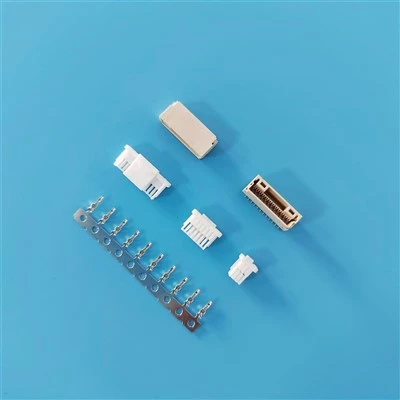
At the end of the day, the best parts are the ones that solve a problem without creating new ones, and that’s exactly what 1.00mm pitch does. It’s not the newest, flashiest pitch out there, but it’s reliable, standardized, and versatile enough to show up in almost every corner of electronics manufacturing. If you’ve used it in a project, I bet you get why it’s so popular—no one’s arguing with a spec that keeps production running smoothly and doesn’t lead to a mountain of reworked parts. If you’re still deciding what pitch to use for your next project, give 1.00mm a shot. And if you need to source bulk or custom 1.00mm pitch components, hit me up to start a conversation about what you need.
0.60mm Pitch References:
- Electronic Design Magazine. (2022). Selecting the Right Connector Pitch for High-Density Applications.
- IPC Association Connecting Electronics Industries. (2021). Standard Practice for Surface Mount Design and Land Pattern Standard.
- TechInsights. (2023). Teardown Analysis of Consumer Wearable Electronics: Interconnect Trends.
- Automotive Engineering International. (2022). Low-Voltage Interconnect Solutions for Modern Vehicle Subsystems.
Dongguan Yinglian Electronics Co., Ltd.
As one of the most professional 1.00mm pitch suppliers in China, we have world-leading production equipment and strong manufacturing capabilities. We warmly welcome you to buy bulk high quality 1.00mm pitch at competitive price from our factory.
Address: No.12, Jidele Road, Juqi, Humen Town, Dongguan City, Guangdong Province, P.R. China
E-mail: James@csg-china.com
WebSite: https://www.csg-conn.com/
