If you’ve ever shopped for spiral ultrafiltration (UF) membranes, you’ve probably seen the term “packing density” thrown around a lot. At first glance, it sounds like one of those jargon-heavy specs that sales reps use to sound smart—like yeah, cool, but what does that even mean for my system? As a membrane supplier, I get it. I’ve sat across from customers who nod politely when I mention packing density, but then they go ask the next vendor for a “better number,” like it’s a race to get the highest score. Let’s break this down straight, no fluff, no confusing formulas, just the real tea on what spiral UF membrane packing density actually is, how it matters, and why it’s not just about chasing the biggest number. Spiral Ultrafiltration Membrane
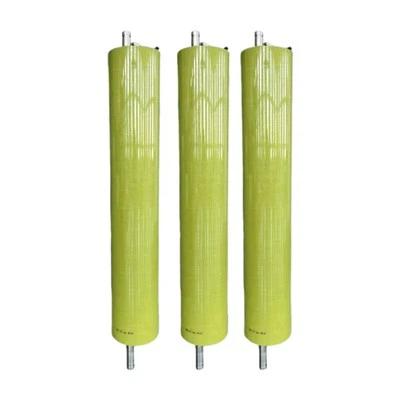
First, let’s keep it super simple: packing density for spiral UF is basically how much active membrane area you can cram into a given shell (or vessel) size. Like, if you have two 8-inch diameter spiral UF elements—one has 75 square meters of membrane area, the other has 85—that higher one has a higher packing density. That’s the core definition. But why should you care? Because it’s not just a stat on a spec sheet. It ties directly to your system’s footprint, cost, and performance. If you need to fit more membrane into a smaller space, higher packing density might sound like a win. But it’s not that cut and dry.
Let’s talk about how we calculate this, because that’s where a lot of confusion happens. The basic formula is something like total effective membrane area divided by the cross-sectional area of the pressure vessel it’s going into. But wait—effective area is key here. Some vendors will fudge the numbers by counting every little crevice of the membrane, even parts that don’t see actual flow. For example, if the membrane’s leaf has a few extra inches wrapped tight, they might count that as area, but in reality, that part never touches the feed water properly, so it doesn’t help with filtration. The real, usable area is what we care about, not just the theoretical number.
Now, let’s get into the real-world tradeoffs. Why can’t every spiral UF element have a sky-high packing density? The membrane itself has physical limits. Spiral elements are made of layers: two sheets of membrane, a feed spacer in between, a permeate spacer, and a central permeate tube. When you roll that up into a cylinder, you have to leave space for the feed to flow through, right? If you cram too much membrane in, the feed spacer gets too narrow. That leads to channeling—where water takes the easiest path through the element, skipping parts of the membrane. So you end up with inconsistent filtration, maybe even fouling in those slow spots because the water isn’t moving enough.
I’ve seen this play out with a customer last year. They switched to a vendor bragging about 10% higher packing density than our standard elements, thinking they could cut the number of vessels they needed. For a month, it worked okay—then their pressure spikes hit 30% higher than usual. When we pulled the elements, there was heavy organic fouling in the middle layers, exactly where the flow was restricted because the feed spacer was squished. They had to replace three months early, and ended up spending more on downtime and replacement than they saved on the element price. That’s the thing about packing density: it’s a balance, not a competition.
What’s a “normal” packing density for spiral UF, anyway? From what we see in the industry, it usually ranges from 700 to 900 square feet per square foot of shell cross-sectional area. Wait, let me translate that to metric because most of my customers use that—about 500 to 650 square meters per square meter of shell area. Our standard elements land right around 800 sq ft/sq ft (580 sq m/sq m), which we’ve tested for thousands of hours across different applications: municipal water, industrial wastewater, food and beverage. We’ve seen vendors push 950 sq ft/sq ft (700 sq m/sq m) elements, but like that customer’s issue, those come with tradeoffs. They work for very specific low-fouling applications, but for most standard processes, you’re better off with a density that doesn’t sacrifice flow.
Another big factor: the type of membrane and spacer. If you’re using a thinner membrane, you can roll it tighter for more area. But thinner membranes are more prone to tearing during installation or backwashing. Or if you use a mesh feed spacer instead of a net spacer, you can fit more membrane in, but mesh creates more friction, so you need higher feed pressure to push water through. Higher pressure means more energy costs over time. We stick with a moderate net spacer because it gives good flow without too much friction, which keeps operating costs low for customers.
Let’s also clear up a common myth: packing density isn’t the same as flux. Flux is how much water passes through the membrane per square meter per hour. Packing density is how much membrane area you have in a space. So if you have two elements with the same packing density, but different membrane materials, their flux will be different. A higher flux membrane might let you process more water, but if its packing density is the same, you still need the same number of vessels. It’s easy to mix these two up, but they’re separate specs that work together.
So, when you’re shopping for spiral UF elements, what should you actually be looking for? Don’t just chase the highest packing density. Ask the vendor what their number is based on: is it effective area (the parts that actually filter water) or theoretical area? Ask if they’ve run long-term tests with that density, especially in your specific application. If you’re treating wastewater with lots of solids, a slightly lower packing density (around 750 sq ft/sq ft, or 540 sq m/sq m) might be better because it reduces fouling. If you have limited space, a moderate higher density paired with a good spacer design can get you the area you need without the performance hits.
Here’s the thing: as a supplier, our job isn’t to sell you the element with the biggest spec number. It’s to sell you an element that works for your system, saves you money on energy and replacements, and doesn’t cause headaches down the line. We’ve spent years testing different packing densities, spacer designs, and membrane thicknesses to find that sweet spot that works for 90% of our customers. Sure, we can make an element with a higher packing density if you have a very specific use case, but we always tell our customers if it’s actually worth it, or if they’d be better off with our standard offering.
I know it’s tempting to look at a spec sheet and pick the number that looks best. But when it comes to UF membranes, spec numbers only matter if they translate to real, reliable performance. The last thing you want is to switch to a higher-density element just to deal with higher pressure, more fouling, and shorter element lifespans.
If you’re currently sizing a UF system, or dealing with performance issues from your current elements, we can help. We don’t do one-size-fits-all, so we’ll walk through your flow rates, water quality, space constraints, and budget to find the right spiral UF elements for you. Shoot us a message or give us a call to talk through your needs—we’re happy to answer any questions about packing density, performance, or anything else membrane-related.
Containerized Water Treatment System References
- Kim, J., & Lee, S. (2020). Packing density optimization of spiral wound ultrafiltration membranes for municipal water treatment. Journal of Membrane Science, 598, 117652.
- Wyart, Y., & Laborde, H. (2018). Trade-offs between packing density and hydraulic performance in spiral UF modules. Desalination, 435, 197-205.
- American Water Works Association. (2019). Ultrafiltration Membrane Systems for Water and Wastewater Treatment. AWWA Manual of Practice, M53.
- Oh, H., et al. (2021). Impact of feed spacer design on packing density and fouling behavior in spiral UF elements. Separation and Purification Technology, 263, 118345.
Hangzhou Nanoimp Environmental Technology Co., Ltd.
With abundant experience, we are one of the most professional spiral ultrafiltration membrane manufacturers and suppliers in China. Welcome to wholesale high quality spiral ultrafiltration membrane in stock here and get pricelist from our factory. We also accept customized orders.
Address: Road 25, Baiyang Street, Qiantang District, Hangzhou City, Zhejiang Province
E-mail: keith.wang@nano-sepmer.com
WebSite: https://www.nanoimp-membrane.com/
