If you’ve ever stood on the production floor of an automotive deep drawing components facility—like ours, where we’ve refined stamping dies and material testing protocols for two decades—you know that one of the most frequent questions our customers ask isn’t about tolerances or load ratings. It’s this: “How adaptable are these parts across different vehicle models?” Automotive Deep Drawn Components
It’s a loaded question, because modern automotive lineups range from subcompact electric hatchbacks that fit in parallel parking spots to heavy-duty pickup trucks rated for 10,000-pound towing capacity, and every segment in between. For a deep drawn component supplier, adaptability isn’t just a nice-to-have—it’s what turns a one-off production run into a long-term partnership. Over the years, I’ve sat in on meetings where an engineer for a European C-segment hatchback called to reorder a brake line fitting, only to follow up six months later asking if that same part could work for an American full-size SUV’s new trailer brake system. That’s when the rubber meets the road: adaptability isn’t just about fitting parts, it’s about how those parts perform across diverse vehicle requirements.
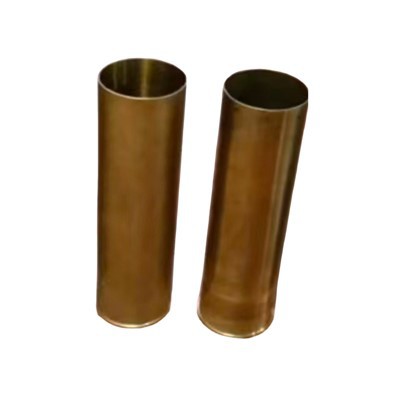
First, let’s break down what makes deep drawn components uniquely positioned for cross-model adaptability. Deep drawing is a metal forming process that uses a punch and die to shape flat sheet metal into hollow, symmetrical parts—think fuel tanks, brake lines, transmission housings, or even small interior structural brackets. Unlike machining, which cuts away excess material and is often limited to one specific part profile from the start, deep drawing starts with a single sheet blank, which can be modified with only minor die adjustments to shift size, radius, or wall thickness. That flexibility is the foundation of adaptability, and it’s a huge advantage over other manufacturing methods when a supplier works with multiple vehicle segments.
But adaptability isn’t just about process. It’s about material consistency, too. When I first started in this industry, suppliers would often source different steel grades for different models, even for seemingly identical deep drawn parts. Back then, a component for a commuter car might use a low-carbon steel, while the same part for a work truck would call for a high-strength steel (HSS) to handle heavier loads. Today, that’s changed. Advanced high-strength steels (AHSS) and aluminum alloys have standardized base materials that work across segments, as long as they’re tested to meet regulatory standards. For example, a 0.8mm AHSS blank that forms into a fuel vapor canister bracket for a subcompact EV can be modified to a 1.2mm version for a full-size pickup’s underbody, without needing a completely new material supply chain. That’s a big win for automakers, who want to reduce part counts and supply chain complexity across their entire model lineup.
Of course, adaptability comes with challenges, and we’ve learned them the hard way. A few years back, we worked with a startup EV brand that was launching three models in two years: a compact SUV, a sedan, and a commercial delivery van. They asked if our standard deep drawn battery cooling lines could be modified for all three vehicles, with only minor changes to length and mounting points. We said yes, but we underestimated the variance in their undercarriage packaging. The SUV had a lower ground clearance, so the line needed a tighter bend radius; the delivery van had a more rugged frame, so the line needed extra corrosion resistance. What we learned that day is that adaptability isn’t a one-size-fits-all promise—it requires close collaboration with engineering teams at every step, from design to prototyping. Now, every time we take on a cross-model project, we set up a dedicated team that includes die makers, material engineers, and quality specialists to map out every variable: ground clearance, vibration requirements, temperature range, and regulatory standards like FMVSS or UN ECE.
Another factor that shapes adaptability is part standardization. The automotive industry has moved away from bespoke parts for every single model, and deep drawn components are leading that shift. For example, a deep drawn seatbelt tensioner housing that fits in a 2024 Honda Civic can often be adapted for a 2024 Toyota Corolla, as long as the mounting points and load ratings align. That’s because automakers now prioritize shared components to cut production costs, and deep drawing is ideal here because it allows for quick die modifications to adjust to the specific vehicle’s footprint. We’ve even had customers take a part we designed for a 2018 model and ask us to adapt it for a 2025 model, just by updating the mounting brackets and tightening compliance to new emissions standards. That kind of longevity is only possible because deep drawing’s core process is flexible enough to evolve with vehicle updates, rather than requiring a full part redesign.
But not all deep drawn components are equally adaptable. Large, structural deep drawn parts—like full fuel tanks or transmission housings—are more limited, simply because their size is tied to the vehicle’s overall design. A fuel tank for a compact EV can’t easily be adapted for a heavy-duty truck, because the tank has to fit in a different wheelbase and fuel capacity requirements. That’s where our team has focused on niche adaptability: instead of trying to make a single large part work for all models, we design modular large deep drawn parts. For example, we manufacture deep drawn fuel tank shells that can be paired with different end caps, baffles, and mounting rings to fit subcompacts, midsize SUVs, and even light-duty trucks. The shell itself is identical, which cuts down on production costs, while the end components are modified to fit each vehicle’s unique underbody. That’s been a game-changer for our business, as it lets us serve multiple segments with a single core part, rather than having to create separate parts for each.
Let’s talk about real-world examples to make this concrete. Last year, we secured a contract with a major European automaker that was launching a new line of hybrid vehicles, spanning from a B-segment hatchback to a D-segment station wagon and a small commercial van. They needed deep drawn high-voltage battery cooling lines for all three models. Our engineering team took our existing deep drawn line design, which had already been tested for 500,000 miles in existing hybrid models, and modified three key variables: length to fit each vehicle’s underfloor, bend radius to avoid interference with the battery pack and exhaust system, and surface coating to resist corrosion in the van’s high-moisture delivery routes. The only change to our production line was adjusting two die settings and running a small batch of quality tests for each variant. The entire process took 12 weeks, compared to the 20 weeks it would have taken if we’d designed three entirely separate parts. That’s the adaptability that our customers value: speed, consistency, and reliability, no matter what model they’re working on.
Of course, adaptability doesn’t stop at the design stage—it extends to quality and compliance. Different regions have different regulatory requirements for automotive parts: a component sold in the U.S. has to meet FMVSS standards, while the same part sold in the EU has to meet UN ECE R110 (for fuel systems) or UN ECE R34 (for fire protection). When a deep drawn part is adapted for multiple markets, we have to ensure that the modifications we make don’t compromise those standards. For example, when we adapted a brake line fitting for a Mexican market pickup and a German market van, we had to adjust the coating thickness: the Mexican part needed a thicker coating to resist salt from desert roads, while the German part needed a thinner, more heat-resistant coating to handle higher operating temperatures in dense urban areas. Our in-house testing lab lets us adjust these variables quickly, so we can get parts to market without delay, no matter the region or model.
I often get asked what sets our deep drawn components apart from competitors when it comes to adaptability. It’s not just the process—it’s the attention to detail that comes from decades of working with automotive brands across segments. Too often, suppliers see adaptability as a buzzword, promising parts that fit anything but cutting corners on quality. For us, adaptability means that every modified part goes through the same rigorous testing as a new, bespoke part: pressure testing for fuel system components, vibration testing for underbody parts, corrosion testing for parts used in harsh environments. A few years back, a customer brought us a design for a deep drawn door hinge bracket that they wanted to use in three different models, but their original design had a sharp radius that would have been prone to cracking during deep drawing. Instead of saying no, our die makers modified the design to create a smoother radius, adjusted the material thickness slightly, and tested the revised part to ensure it met the load requirements for all three models. That’s the kind of collaborative adaptability that builds long-term partnerships.
As the automotive industry shifts toward electrification and more modular lineups, adaptability will only become more important. Automakers are no longer building separate platforms for every model; they’re building flexible platforms that can be adjusted for sedans, SUVs, vans, and EVs with minimal changes. Deep drawn components are at the center of this shift, because their flexible design and production process let automakers reduce part counts, cut costs, and speed up time-to-market. But for suppliers like us, that means we have to keep evolving too. We’ve invested in new die-making software that lets us prototype modified parts in days, rather than weeks, and we’ve trained our team to work with cross-functional engineering teams from different regions and segments.
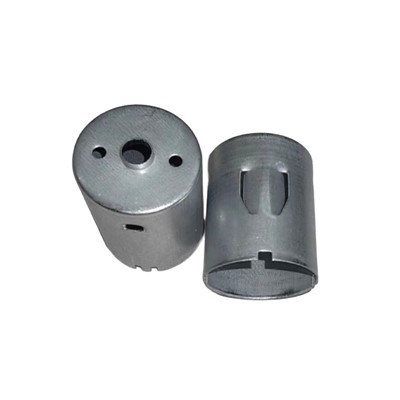
If you’re an automotive engineer or procurement manager looking for a supplier that can support your brand’s line of diverse vehicle models, adaptability shouldn’t be an afterthought—it should be the foundation of your component strategy. Our team has the experience, technology, and industry relationships to work with you from design through production, creating deep drawn components that fit your models, meet your compliance standards, and evolve with your brand. Whether you’re working on a new compact EV or updating your line of heavy-duty trucks, we can provide the custom, adaptable deep drawn parts you need to keep your production on track. To discuss your project, reach out to our team to start a conversation about how our deep drawn components can support your vehicle lineup.
Micro Motor Stamping Parts References
- Automotive Deep Drawing: Process, Materials, and Applications. Society of Manufacturing Engineers, 2022.
- Global Automotive Component Standardization Report. International Organization of Motor Vehicle Manufacturers, 2023.
- Advanced High-Strength Steels for Lightweight Automotive Components. American Iron and Steel Institute, 2021.
- Regulatory Compliance for Automotive Underbody Components. National Highway Traffic Safety Administration, 2022.
Yuyao Aozhou Metal Products Co., Ltd.
Address: No.6, Nanbailonggang, Wuma Industrial Zone, Lubu Town, Yuyao City
E-mail: xqr-2316@163.com
WebSite: https://www.cnaozhou.com/
