If you’ve ever been in a commercial building that never loses power during a storm, or a hospital operating room that doesn’t skip a beat when the grid flickers, chances are an automatic transfer switch (ATS) was the unsung hero making that happen. As an ATS supplier, I get asked all the time: how does this unassuming box interact with a generator to keep power flowing seamlessly? It’s not just about flipping a switch—there’s a precise, split-second dance between two pieces of equipment that has to be calibrated perfectly, every single time. Let me break this down, from the moment the grid dips to the second power is restored, straight from the perspective of someone who’s installed, troubleshooted, and consulted on these systems for over a decade. Automatic Transfer Switch
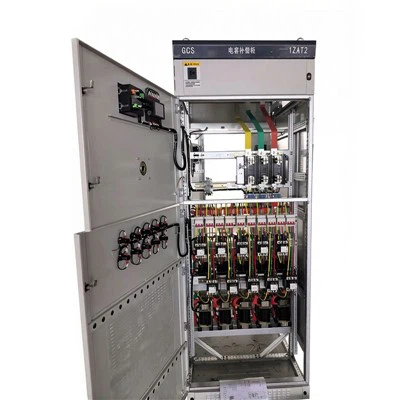
First, let’s set the scene. The grid is our primary power source for almost all applications—retail stores, office buildings, warehouses, even residential complexes where backup power is standard these days. But grids fail. A downed power line from a thunderstorm, a transformer fire, a scheduled maintenance outage that runs way longer than promised—these disruptions aren’t rare. For businesses, every minute of downtime costs money. For critical facilities like hospitals, data centers, or 911 call centers, downtime isn’t just costly—it’s dangerous. That’s where the ATS and generator pair comes in. The ATS is the middleman, the control center that monitors grid power 24/7, decides when power is out, and orchestrates the switch between grid and generator—usually in less than 10 seconds, often as fast as 2.
Let’s start with the ATS’s core job: sensing grid power. Modern ATS units have built-in voltage and frequency sensors that check grid power dozens of times per second. Normal grid power in North America is 120/240 volts, 60 hertz (Hz), and similar standards apply globally. The ATS is programmed to a tolerance range—usually ±5% for voltage, ±0.5 Hz for frequency—where it considers power “good.” If the grid drops below that threshold, say a thunderstorm takes out a line and voltage falls to 90 volts, the ATS doesn’t flip immediately. It waits a few seconds to rule out a temporary blip—like a squirrel’s brief contact with a line—that could cause a false switchover. No one wants their HVAC turning on and off every time a small fluctuation hits the grid.
Once the ATS confirms the grid is out, it sends a signal to the generator to start. This is the handshake that makes the whole system work. The signal is low-voltage, usually 12 or 24 volts, that tells the generator’s control module: “Start up, we’re going to take over.” Generators need time to get ready, right? A gasoline-powered portable generator can start in 2-3 seconds, but a larger diesel generator for a 10,000-square-foot retail space might take 10-15 seconds to reach full voltage and frequency. The ATS doesn’t trigger the switch until it gets a confirmation back from the generator that it’s at the correct voltage and frequency—this is called “matched voltage and frequency.” You can’t just switch raw generator power to the building; if the generator is running at 50 Hz when the grid is 60 Hz, plugging that into a commercial AC unit will fry the motor in seconds. The ATS checks both the grid’s “dead” status and the generator’s “ready” status before it moves to transfer power.
Now, the actual transfer. This is where the ATS does its most important work, and why it’s so different from a manual switch. A manual transfer switch works when a person physically flips a lever from grid to generator—simple, but it requires someone to be there, and it’s not fast enough for critical loads. An ATS has two main contactors: one connected to the grid, one connected to the generator. When it’s time to switch, the ATS first opens the grid contactor completely, then waits a tiny split second (usually 1-2 cycles of AC power, so less than a tenth of a second) before closing the generator contactor. That’s a “break-before-make” transfer, which prevents any moment when both grid and generator are connected. If they were, you’d have a short circuit that could damage both the generator, the grid, or even the building’s wiring. I’ve seen this go wrong on a few projects where a cheap, uncalibrated ATS skipped that break-before-make step—resulting in thousands of dollars in equipment damage. It’s a tiny detail, but it’s non-negotiable.
Once the transfer is complete, the generator is powering the building. The ATS continues to monitor both the generator and the grid, keeping track of how long the outage lasts. When grid power comes back, it has to meet that same voltage and frequency tolerance range to be considered safe to reconnect. Once it’s stable, the ATS sends a signal to the generator to shut down, and again, uses break-before-make logic to switch back to grid power. Why not just shut the generator off immediately? It needs to cool down first. Most generators have a built-in cool-down cycle—usually 2-5 minutes—where they run at low load after the power transfer back to grid is complete, to prevent damage to the engine. The ATS times this perfectly, so it doesn’t cut power to the building while waiting, and lets the generator finish its cool-down before triggering a full shutdown.
Wait, but not all ATS transfers are the same. There are different types for different applications, and that’s something I see customers get wrong all the time. For example, open transition ATS is what I just described—break-before-make, standard for most commercial and industrial applications where the load can tolerate a tiny, almost unnoticeable power interruption. But for sensitive loads, like servers in a data center or MRI machines in a hospital, even a 1/10th of a second interruption is too much. For those, we use closed transition (or soft load) ATS. Closed transition lets both grid and generator be connected for a few milliseconds during transfer, with a current limiter to make sure no backflow occurs. That eliminates the power interruption entirely, but it’s more complex and requires a generator that can handle parallel operation. As an ATS supplier, my job is to help customers pick the right type, not just sell a unit. I once had a small clinic come to me thinking they only needed a basic open transition ATS, until we walked through their MRI machine’s specs—they couldn’t afford to have that machine’s coil burn out, so we upgraded them to a closed transition unit. It’s the difference between a $5,000 ATS and a $15,000 ATS, but it’s worth every penny to a business that relies on sensitive equipment.
Another common question: what about loads that can’t be interrupted at all? For example, a critical care unit in a hospital. That’s where we pair an ATS with an uninterruptible power supply (UPS) system, though the ATS is still the core component. The UPS kicks in the millisecond the grid goes out, powering the critical load while the generator starts, and the ATS transfers the load from UPS to generator once the generator is ready. That’s a layered approach, and the ATS coordinates all of it—something that many general contractors don’t account for when putting together a backup power system. I’ve had to come out to sites after the initial install where the ATS and UPS were talking different protocols, so neither knew when to switch. Getting that communication right is half the battle.
Let me also touch on maintenance, because an ATS is only as good as it is when it’s tested. The biggest mistake I see is customers installing an ATS and generator, then never testing it. Grid power is stable 99% of the time, so it’s easy to forget that the system could fail when you need it most. Modern ATS units have built-in test modes that let you simulate a grid outage without actually switching power to the building. I recommend monthly tests (for critical facilities) and quarterly tests (for standard commercial buildings) to make sure the sensors, contactors, and transfer logic all work as intended. Last year, I worked with a grocery store that had an ATS installed 5 years prior—they’d never tested it, and when a storm hit, the sensor was calibrated wrong, so it never triggered the generator. They lost $20,000 in frozen food, and it all could have been avoided with a 5-minute test.
Now, let’s talk about common myths I hear as an ATS supplier. The first is that bigger is better. A lot of customers buy an ATS rated for way more power than they need, thinking it’s safer. But an ATS is only effective if it’s sized to match the generator and the building’s load. If you have a 100-amp service and a 75-kilowatt generator, you don’t need a 200-amp ATS—it’ll just be bulkier and more expensive than necessary. Another myth is that ATS units are all the same. Cheaper, off-brand units might skip features like fault monitoring, flexible calibration, or the required break-before-make logic. I’ve seen a customer in Texas buy a $1,000 generic ATS from a big-box store, only to have it fail during a winter storm when the temperature caused the internal contacts to stick. A quality ATS from a reputable supplier might cost 2-3 times that, but it’s built to handle extreme conditions, has built-in diagnostics, and comes with a warranty that covers parts and labor.
So, putting it all together, how does an ATS interact with a generator? It’s a coordinated, automated process that starts with constant monitoring of grid power, validates when power is lost, signals the generator to start, confirms the generator is stable before switching power, uses a fail-safe break-before-make transfer logic to protect equipment, switches back seamlessly when grid is restored, and times the generator’s cool-down cycle to prevent engine damage. It’s not a magic box that just flips a switch—it’s a precision control system that’s critical to keeping power flowing when it matters most.

If you’re building a new facility, upgrading your backup power system, or troubleshooting an existing ATS-generator pair, I’m here to help. We’ve worked with small retail shops, hospitals, data centers, and industrial warehouses to design, supply, and install ATS systems that fit their specific needs. Whether you’re not sure what size ATS you need, want to upgrade to a more reliable unit, or need help calibrating your existing system, don’t hesitate to reach out for a consultation.
High-Voltage Switchgear References
- National Fire Protection Association. (2020). Standard for Electrical Installations and Equipment for Emergency and Standby Power Systems. NFPA 110.
- Underwriters Laboratories. (2021). Standard for Transfer Switches, Assembly, Automatic, for Hazardous (Classified) Locations. UL 1008.
- U.S. Department of Energy. (2019). Backup Power Systems for Commercial and Industrial Facilities: Best Practices and Maintenance Guidelines.
Jiangxi Yihong Electric Power Technology Co., Ltd.
Address: Chating Industrial Park, Guangxin District, Shangrao City, Jiangxi Province
E-mail: 15779933057@163.com
WebSite: https://www.yihcn.com/
